When less means more: the finger food revolution
There’s a new philosophy redefining contemporary catering: that of finger food. It’s not minimalism for its own sake, but an intelligent response to the needs of the modern audience.
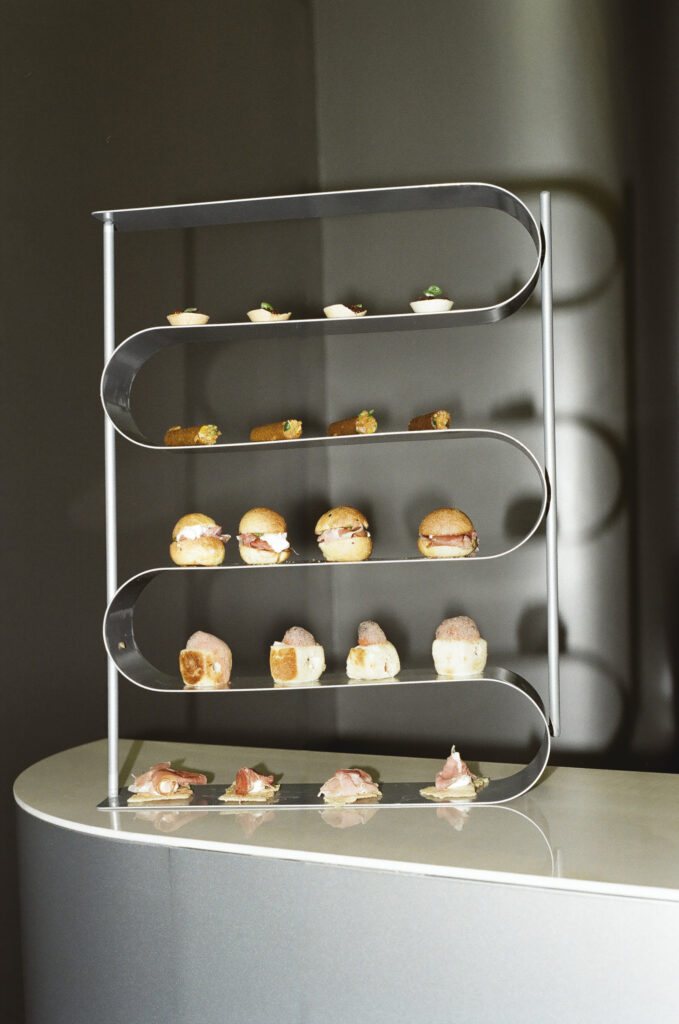
At events where sociality and interaction are central, micro-portions allow guests to taste multiple proposals without feeling heavy, maintaining energy and concentration, and enabling them to move freely, converse without obstacles, and experience the occasion naturally. From a culinary perspective, they offer the opportunity to compose varied taste journeys: six, eight, ten different tastings that tell a story through contrasting flavors, textures, and temperatures.
This choice also responds to a growing sensitivity toward sustainability: calibrated portions mean less waste, greater attention to the quality of each ingredient, and the possibility to experiment without fear of oversizing quantities that would remain uneaten.
The world in a bite: contaminations that open horizons
Globalization has transformed our palate: gastronomic contaminations are no longer a niche trend, but a necessity when audiences come from diverse cultures and bring with them varied expectations and references.
We’re talking about cuisine that weaves traditions together with respect and curiosity. Tuna pizzaiola is renewed with dehydrated olive, caper powder, and tomato mayonnaise, while amberjack reinterprets panzanella through sweet and sour onion and crispy bread leaves. Not confused fusion, but authentic dialogue between gastronomic worlds that mutually enrich each other.
For an American or English audience participating in events in Italy, these contaminations create a bridge: the possibility of recognizing familiar elements in a new context thanks to finger food, or discovering Mediterranean flavors through preparations that recall Italian culinary tradition. It’s cultural inclusion through food, where each guest finds something that makes them feel welcomed.
Plant-based cuisine beyond labels
Plant-based is no longer an alternative, but a conscious choice that’s gaining space in high-profile menus. Vegetarian cuisine at contemporary events has emancipated itself from the idea of being a substitute to become an autonomous protagonist, capable of expressing complexity and refinement.
We’re not talking about simple salads or side dishes elevated to main courses, but creations that value vegetables, legumes, grains, and fruits with the same attention traditionally reserved for other ingredients. Vegetarian micro-portion is born from shaped and rehydrated vegetable sheets, small plant architectures that combine technique and lightness.
A mini whole-grain bread cube welcomes an avocado cream and fresh sprouts, while the potato cannoncino encloses a beetroot tartare balanced between sweetness and aromatic depth. The crispy potato gnocchetto, scented with saffron and vanilla, reveals a heart of lime honey, demonstrating how plant-based cuisine can be simultaneously refined, surprising, and deeply sensorial.
This evolution responds to an increasingly broad audience: not only those who follow vegetarian or vegan diets for ethical reasons, but also those seeking lightness without sacrificing taste, those exploring new culinary experiences, those appreciating the creativity needed to make plant ingredients shine. For quality catering that wants to be recognized, it means designing proposals where plant-based dialogues with the rest of the menu without hierarchies, creating an inclusive offering that doesn’t isolate but integrates.
Conscious wellness at the table
There’s a new attention to the relationship between what we eat and how it makes us feel, an attention that has transformed the very concept of healthy cuisine. It’s not about renouncing pleasure in the name of virtue, but discovering how taste and wellness can coexist harmoniously.
Ingredients rich in beneficial properties enter menus naturally: quinoa and ancient grains bring interesting textures as well as nutritional value, goji berries and pomegranate add chromatic notes and natural sweetness, turmeric and fresh ginger give character without needing excess. The key lies in integrating them wisely, without transforming the dish into a list of “functional foods” but creating taste harmonies where each element makes sense.
This sensitivity is also reflected in preparation techniques: cooking methods that preserve organoleptic qualities and nutrients, natural reductions that avoid superfluous fats, balances that satisfy the palate without weighing it down. For those organizing high-caliber events, it means offering guests the possibility of enjoying a complete gastronomic experience while feeling good during and after, without that sensation of heaviness that often accompanies formal meals.
The result is cuisine that respects guests’ intelligence: they can recognize when a dish is thoughtfully designed for their overall well-being, and they appreciate this form of attention without needing it to be declared or emphasized.
Presentation as visual language
Contemporary gastronomic trends also live through aesthetics. Finger food requires careful presentation where every detail counts: the dish becomes a small work of art that’s appreciated first with the eyes, then with the palate. Cultural contaminations are expressed visually through unexpected chromatic combinations, arrangements that recall different traditions, decorative elements that suggest distant geographies.
And it’s particularly color that makes the difference, especially in the food/beverage pairing: when a guest or brand wants to tell their story and values, personalization through visuals becomes a distinctive element.
This is why the visual dimension isn’t superficiality, but an integral part of communication: when celebrating an important occasion, every element contributes to building a coherent atmosphere, and the table also tells who we are and what we want to convey.
Mixology: the art of beverage as experience
Beverage has ceased to be a simple accompaniment to become an integral part of the gastronomic narrative. Contemporary mixology brings to quality events the same artisanal attention reserved for cuisine: fresh and seasonal ingredients, precise techniques, presentations studied in minute detail.
Iconic cocktails continue to be part of the gastronomic experience, designed to enhance the food they accompany: an element that pairs well with fish for its dry notes, a cocktail more suited to spicy and bold flavors, or a mix of ingredients for sweeter notes.
And sometimes it’s not just about signature cocktails, but about building personalized taste journeys. Particularly interesting, for example, is the growing attention toward high-profile non-alcoholic proposals: no longer simple alternatives, but autonomous creations with the same complexity and care as traditional cocktails. Botanical distillates without alcohol, flavored kombuchas, shrubs based on fruit vinegars allow offering all guests a sophisticated experience, regardless of their personal choices.
Looking ahead with awareness
Embracing contemporary gastronomic trends doesn’t mean chasing every novelty, but understanding which evolutions authentically reflect the changes of our time. Finger food responds to the need for variety, sustainability, and dynamism. Cultural contaminations reflect an increasingly interconnected world where identities are enriched through exchange. Plant-based cuisine and attention to wellness express a new sensitivity toward ourselves and the environment around us.
For those organizing high-level occasions with international ambitions like Spuma, these aren’t simply gastronomic trends but tools for building experiences that speak to an evolved and multicultural audience. Experiences where food isn’t filler, but a protagonist capable of creating authentic connections and leaving lasting impressions.
Contemporary cuisine for quality events is this: a balance between roots and openness, between recognizability and surprise, between technique and spontaneity. It’s the art of making each guest feel welcomed while inviting them to discover something new, creating that mix of comfort and stimulation that transforms an occasion into a memory to cherish.